FAG vs SKF Bearing Designation Systems: Cross-Reference Wholesale Supplier Guide
A basic number match does not mean interchangeability — the suffix code is where the real risk hides.
FAG and SKF bearing designation systems share the same ISO boundary dimensions but diverge completely in suffix logic: internal design codes, clearance group markings, seal variants, and cage material indicators are not one-to-one interchangeable. A direct letter-for-letter swap without structured cross-reference verification will almost certainly lead to field failures, warranty claims, or full-container returns.
I still remember a shipment of spherical roller bearings bound for a steel mill in the Gulf region. The client had specified the model using the FAG catalogue, but our warehouse pulled stock based on the SKF directory — the basic number matched, yet a single suffix letter for radial internal clearance was interpreted differently between the two systems. The bearings seized during commissioning, the entire batch came back, and the round-trip freight alone wiped out the margin on that order and several others combined. [NEED_CITE: ISO 15 defines boundary dimensions but does not govern manufacturer-specific suffix conventions] That was the moment I stopped treating designation systems as interchangeable dictionaries and started building structured cross-reference workflows for every order.

Let me walk you through how each system is built, where the suffix traps sit, and how we verify compatibility before any container leaves the warehouse.
Why Can’t You Simply Swap FAG and SKF Bearings by Basic Number?
The basic designation — the numeric or alpha-numeric core — only confirms that two bearings share the same external envelope: bore, outside diameter, and width. It tells you nothing about what happens inside that envelope.
Both FAG and SKF conform to ISO 15 for boundary dimensions, so a 22320 from either brand will physically drop into the same housing. [NEED_CITE: ISO 15 specifies rolling bearing boundary dimensions for radial bearings] What the basic number does not capture:
- Internal geometry modifications (raceway curvature, roller profile, contact angle adjustments)
- Radial internal clearance group assignments and their tolerance band definitions
- Cage design, material, and guidance system
- Seal or shield configurations and their retention methods
- Precision class markings and their grading criteria
- Special heat treatment or surface finish variants
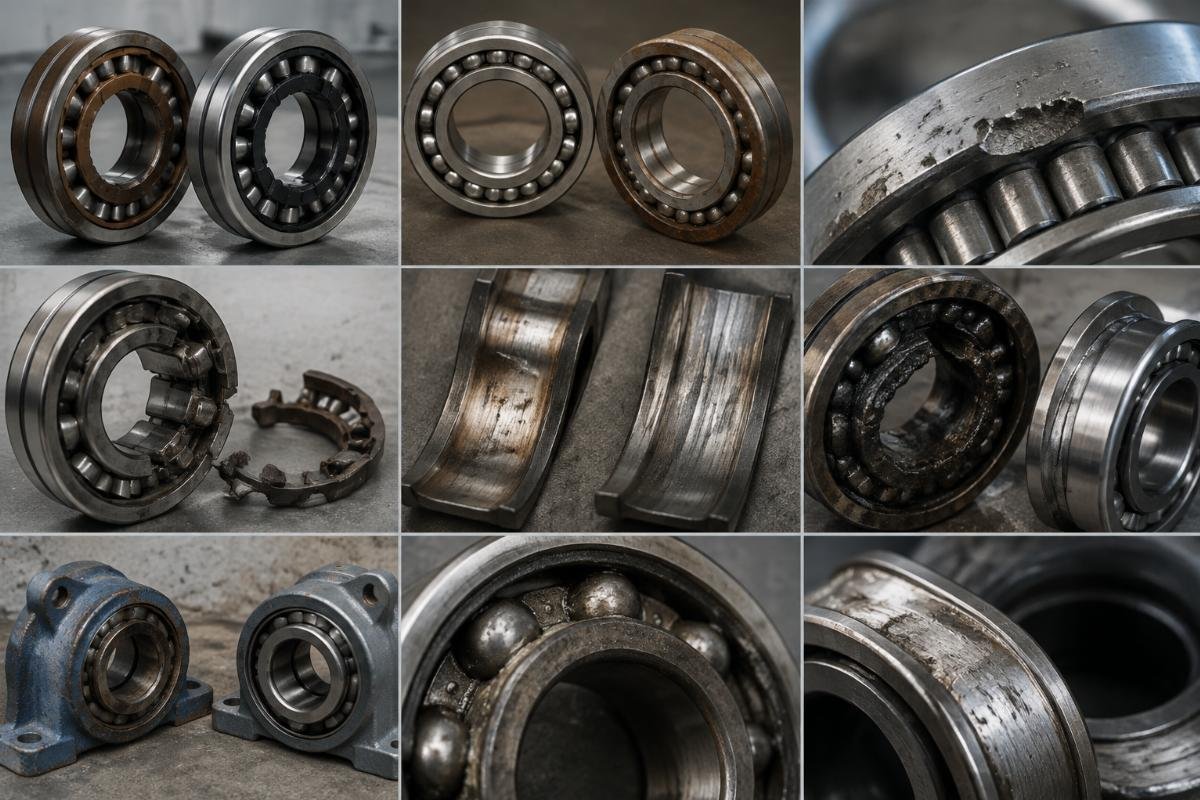
A Middle East distributor once forwarded me a complaint from an end user who had replaced original FAG-positioned bearings with SKF equivalents on a vibrating screen. The basic number matched perfectly. Within weeks, vibration readings climbed noticeably, and the maintenance team pulled the units to find accelerated cage wear. The root cause: the cage suffix in the FAG system denoted a window-type brass cage with roller guidance, while the corresponding SKF suffix pointed to a different cage architecture with inner-ring guidance. The load distribution pattern shifted, and the cage pockets experienced higher stress. A full batch of several dozen sets had to be pulled from service.
This is not a rare edge case. It is the default risk whenever cross-brand substitution is done by basic number alone.
How Is the SKF Bearing Designation System Structured?
SKF builds its designation as a layered code: type identifier, dimension series, and then a sequence of suffix groups covering internal design, external design, cage, clearance, precision, and special variants.
The structure follows a consistent left-to-right logic:
- Type code — letters indicating bearing category (e.g., deep groove ball, angular contact, spherical roller)
- Dimension series — a combination of digits defining the width series and diameter series per ISO conventions
- Basic number — the core size identifier
- Suffix group — internal design — letters indicating contact angle, raceway design, roller modifications
- Suffix group — external design — seals, snap ring grooves, lubrication holes
- Suffix group — cage design — material and configuration codes
- Suffix group — clearance — C2, C3, C4, etc.
- Suffix group — precision — P6, P5, P4, P2
- Suffix group — special requirements — noise class, lubricant fill, high-temperature variants
[NEED_CITE: SKF designation system follows a modular suffix structure documented in their general catalogue]
For example, in a spherical roller bearing designation, a suffix like ECA indicates a specific internal design with guided cage and increased capacity, while CC denotes a different cage architecture with cent rollers. Swap those two, and you change the load path inside the bearing.
A critical detail that buyers often miss: SKF places clearance designations in a fixed suffix position, and the same C3 marking in SKF carries a specific tolerance band that is defined by SKF’s own interpretation of ISO 5753. [NEED_CITE: ISO 5753 defines radial internal clearance groups for rolling bearings] The numeric range is standardized, but how each manufacturer labels and positions that marking in the full part number differs.
How Is the FAG Bearing Designation System Structured?
FAG, as part of the Schaeffler group, uses a designation system where the basic code is followed by suffix groups covering design variants, clearance, seals, cage, and precision — but the sequencing order and letter assignments do not mirror SKF’s structure.
The FAG system breaks down as:
- Basic designation — type and dimension series combined
- Suffix group — design variant — internal geometry modifications, X-life indicators
- Suffix group — clearance — same ISO group names (C2, C3, C4) but positioned differently in the suffix string
- Suffix group — seal/shield — contact and non-contact seal codes
- Suffix group — cage — material and type indicators
- Suffix group — precision — P5, P4, etc.
- Suffix group — special — lubrication, noise, coating
[NEED_CITE: FAG designation system is documented in Schaeffler’s rolling bearing catalogue with suffix tables]
The X-life designation in FAG is worth special attention. It indicates an optimized internal geometry with improved surface finishes on raceways and rolling elements, delivering extended service life under equivalent loading conditions. There is no direct SKF suffix equivalent — SKF uses its own Explorer class designation, which sits outside the standard suffix string entirely. [NEED_CITE: FAG X-life and SKF Explorer represent manufacturer-specific performance class designations]
An African mining operation once replaced original FAG-positioned bearings on conveyor pulleys. The procurement team converted the FAG part number to SKF by matching the basic number and copying the C3 clearance suffix. What they missed: the FAG suffix for the cage design indicated a pressed steel window cage, while the SKF suffix they selected corresponded to a machined brass cage. The operating speed and load combination on that conveyor favored the steel cage’s mass characteristics. The brass cage units ran noticeably hotter, and the maintenance team reported shortened service intervals — estimated at roughly half the expected run time — before the root cause was traced back to the cage mismatch.
Where Do the Suffix Differences Cause Real Failures?
The three suffix categories that generate the most field failures in cross-brand substitution are radial internal clearance, cage design, and seal configuration — because each carries different letter assignments and positional logic between FAG and SKF.
Radial Internal Clearance:
Both brands use C2, C3, C4 designations per ISO 5753, but the tolerance band realization and the suffix positioning within the full part number differ. A C3 in FAG and a C3 in SKF both refer to the same clearance group in theory, but if the suffix is placed in the wrong position during manual cross-reference, the ordering system may pull a standard clearance unit instead. [NEED_CITE: ISO 5753 defines radial internal clearance groups but not manufacturer suffix placement]
Cage Design:
This is the highest-risk category. FAG and SKF use entirely different letter codes for cage materials and configurations. A machined brass cage in one system may share no common letter with the equivalent designation in the other. A Latin American distributor mixed FAG and SKF bearings of the same basic size on a single order for a pulp and paper mill. The end user reported vibration differences between positions. Investigation revealed that the cage suffixes, while both indicating brass, pointed to different cage guidance systems — one roller-guided, the other inner-ring-guided. Several dozen sets across multiple batches were affected before the discrepancy was caught.
Seal Configuration:
Contact seals, non-contact shields, and labyrinth seals carry different suffix letters between the two systems. A 2RS in one brand may correspond to a different suffix in the other, and the physical seal geometry — lip design, contact pressure, material compound — is manufacturer-specific. Ordering the wrong seal variant can lead to contamination ingress or excessive friction heat generation.
How to Build a Reliable Cross-Reference Between FAG and SKF?
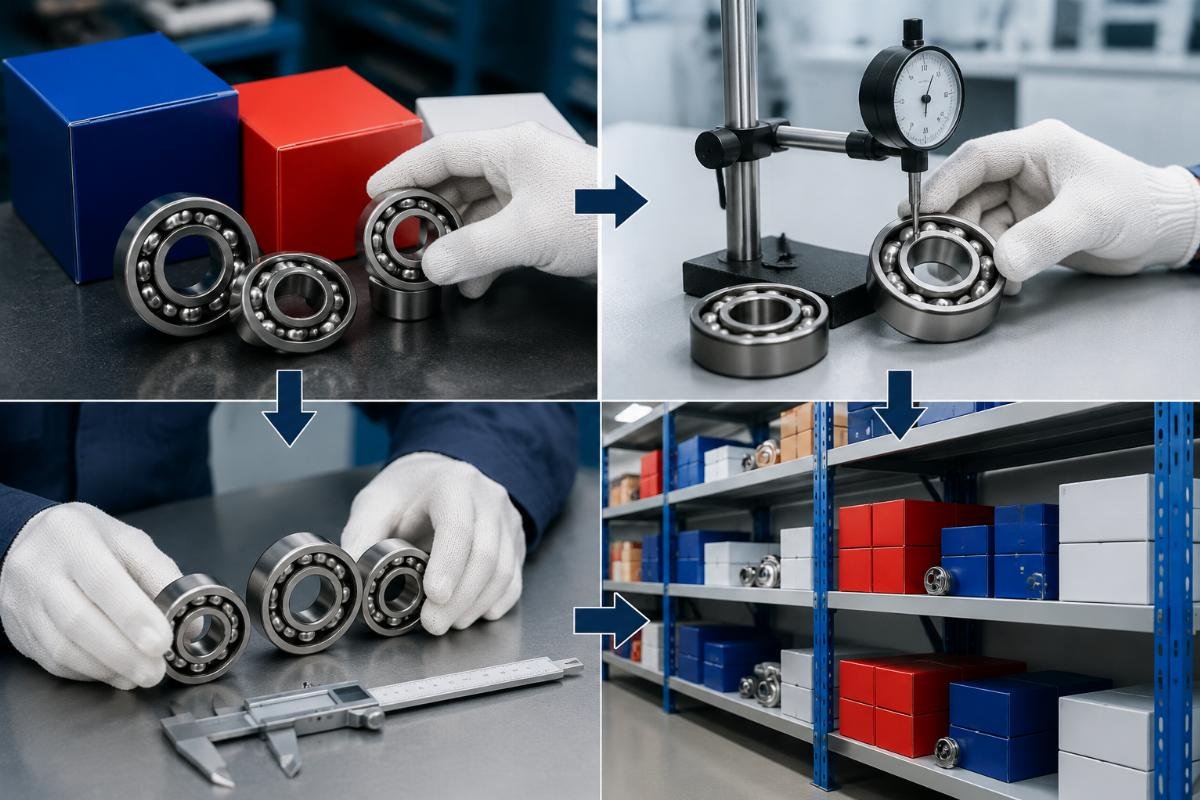
A reliable cross-reference requires a structured four-step verification process that treats the suffix string as a separate validation layer, not an afterthought to the basic number match.
Step 1 — Confirm the Original Designation System
Before any conversion begins, identify which brand’s catalogue the original equipment specification was drawn from. This is not always obvious — maintenance records may mix notations, and some OEMs specify using one brand’s system while sourcing from another. [NEED_CITE: OEM bearing specifications may reference different manufacturer designation systems]
Step 2 — Decompose the Basic Designation
Separate the type code, dimension series, and bore size. Verify that the target brand produces an equivalent basic number under ISO 15. If the basic number does not exist in the target system, the cross-reference stops — no suffix matching can compensate for a dimensional mismatch.
Step 3 — Suffix-by-Suffix Verification
Work through each suffix group systematically:
- Internal design variant — map the letter code to the target brand’s equivalent geometry
- Clearance group — confirm the ISO group name and verify the target brand’s suffix position
- Cage design — cross-check material and guidance type, not just the letter
- Seal/shield — verify contact vs. non-contact, material, and retention method
- Precision class — confirm the ABMA/ISO grade equivalence
- Special variants — heat treatment, coating, lubrication fill
[NEED_CITE: ABMA and ISO standards define precision classes but manufacturer suffix codes vary]
Step 4 — Application Condition Review
Even with a technically correct suffix match, verify that the substituted bearing suits the actual operating conditions: speed, load direction, temperature, contamination exposure, and lubrication method. A technically correct cross-reference can still fail if the application demands a performance class that the substituted variant does not cover.
In our daily operations, we run this four-step verification on every cross-brand order — whether it involves FAG, SKF, NSK, TIMKEN, NTN, or KOYO. Each suffix is checked against the target brand’s current catalogue, not a legacy chart, because designation systems get updated. A suffix that meant one thing five years ago may have been reassigned. We flag every discrepancy to the buyer before the order is confirmed, and we document the verified equivalence on the packing list so the receiving team can cross-check at the port.
Conclusion
FAG and SKF bearing designation systems are structurally different, and suffix-level mismatches are the primary source of cross-brand substitution failures. Basic number matching is necessary but insufficient — clearance codes, cage designations, seal variants, and internal design markers must each be verified against the target brand’s current catalogue using a structured workflow. A disciplined four-step cross-reference process eliminates the guesswork and prevents costly field failures, warranty disputes, and return freight losses.