Angular Contact Ball Bearing for Multi-Site Food Processing Lines Supplier
Stainless steel housings alone do not guarantee survival in food processing environments.
The most effective strategy for minimizing unplanned downtime across multi-site operations is standardizing on high-performance angular contact ball bearings that prioritize seal integrity and food-grade lubricant compatibility over mere housing material. This approach ensures consistent resistance to harsh washdown chemicals and thermal shock, directly addressing the primary drivers of premature failure in wet and humid processing zones.
In my years managing supply chains for industrial clients across Southeast Asia, I have witnessed how a single component specification error can cascade into systemic operational failures. The assumption that higher precision grades automatically solve washdown issues is a common misconception. In reality, correct shielding configurations and proper cavity filling are far more critical for longevity than micron-level tolerances alone. [NEED_CITE: bearing failure modes in washdown environments per ISO 15243]
Understanding why these specific bearings fail requires looking beyond load ratings to the chemical and thermal stresses inherent in modern food safety protocols.
Why Do Food Processing Lines Fail Prematurely?
Washdown and chemical exposure are the primary drivers of bearing failure, not just mechanical load.
Many procurement teams focus heavily on radial load capacity while underestimating the corrosive impact of daily cleaning cycles. In high-humidity environments like seafood or poultry processing, bearings are subjected to high-pressure water jets, caustic cleaners, and steam. These elements penetrate inadequate seals, washing out lubricants and introducing contaminants that accelerate wear. [NEED_CITE: impact of cleaning agents on bearing lubrication stability]
I recall a project involving a large-scale seafood processing facility in the Mekong Delta. The plant operated multiple high-speed conveyor lines for shrimp sorting. Initially, the maintenance team selected bearings based primarily on stainless steel housings, assuming this would suffice for the wet environment. However, they overlooked the seal design. The standard rubber seals could not withstand the high-pressure washdowns used to meet hygiene standards. Within weeks, the lubricant was completely flushed out, leading to rapid corrosion and cage failure. The replacement cycle dropped from an expected twelve months to less than three weeks.
The cost of this downtime far exceeded the price difference between standard and specialized bearings. Each hour of line stoppage resulted in significant product spoilage and labor inefficiencies. This case highlights that the true cost of a bearing in food processing is not its purchase price but its ability to maintain integrity under aggressive cleaning regimes. [NEED_CITE: total cost of ownership analysis for MRO components in food industry]
Selecting the right component requires a shift in perspective from static load handling to dynamic environmental resistance.
What Makes Angular Contact Bearings Critical in Conveyors?
Angular contact ball bearings handle combined radial and axial loads essential for high-speed sorting and precise positioning.
Unlike deep groove ball bearings, angular contact designs are engineered to support significant axial loads in one direction. This capability is crucial in conveyor systems where belt tensioning and product weight create complex force vectors. In high-speed sorting applications, such as those found in poultry or bakery lines, precise shaft positioning is vital to prevent misalignment and vibration. [NEED_CITE: axial load capacity requirements for conveyor tensioning systems]
In a poultry processing plant in Thailand, I observed a conveyor system that frequently experienced premature failures. The issue was not just the washdown environment but the combination of high radial loads from heavy carcasses and axial thrust from the conveyor drive mechanism. Standard bearings struggled to manage these combined loads, leading to early fatigue. By switching to angular contact ball bearings with optimized internal geometry, the system achieved better stability and reduced vibration levels.
The key here is matching the contact angle to the application’s load profile. A steeper contact angle provides higher axial load capacity but may reduce radial capacity. For food processing lines, where speeds are moderate but loads are variable, a medium contact angle often offers the best balance. Additionally, the rigid structure of angular contact bearings helps maintain alignment even when subjected to thermal expansion from steam cleaning cycles. [NEED_CITE: thermal expansion effects on bearing alignment in food processing]
Proper selection involves more than just load ratings; it demands attention to the sealing and lubrication interface.
How to Select the Right Seal and Lubricant?
Match seal material to cleaning agents and ensure NSF H1 registered lubricants are used.
The seal is the first line of defense against contamination. In food processing, seals must resist not only water but also aggressive cleaning chemicals like chlorinated alkalines and acid-based sanitizers. Standard nitrile rubber seals may degrade quickly when exposed to these substances, leading to hardening, cracking, and eventual failure. Fluoroelastomer (FKM) or PTFE seals offer superior chemical resistance and are often recommended for harsh washdown zones. [NEED_CITE: chemical compatibility of elastomers with food industry sanitizers]
Lubricant selection is equally critical. The lubricant must remain stable under thermal cycling and resist being washed out by high-pressure water. NSF H1 registered lubricants are mandatory for any application where incidental food contact is possible. These lubricants are formulated to be non-toxic and odorless, ensuring compliance with international food safety standards. [NEED_CITE: ISO 21469 certification requirements for food-grade lubricants]
A multi-site bakery chain in Indonesia faced challenges with inconsistent bearing performance across its facilities. Some sites used generic greases that broke down under the heat of ovens and subsequent washdowns. This led to frequent regreasing intervals and unexpected failures. By standardizing on a high-viscosity, food-grade grease with excellent water resistance, the chain saw a noticeable improvement in bearing life. The consistency in lubrication also simplified maintenance procedures, as technicians no longer needed to manage multiple grease types.
It is important to verify that the lubricant’s viscosity remains stable across the operating temperature range. Thermal shock from hot washdowns can cause some greases to thin out excessively, reducing their protective film strength. Selecting a lubricant with a high dropping point and good shear stability ensures long-term protection. [NEED_CITE: lubricant viscosity stability under thermal cycling in industrial applications]
Standardization across multiple sites can significantly reduce complexity and improve reliability.
Case Study: Standardization Across Multi-Site Operations
Standardizing on a single high-performance bearing SKU reduces inventory complexity and improves uptime.
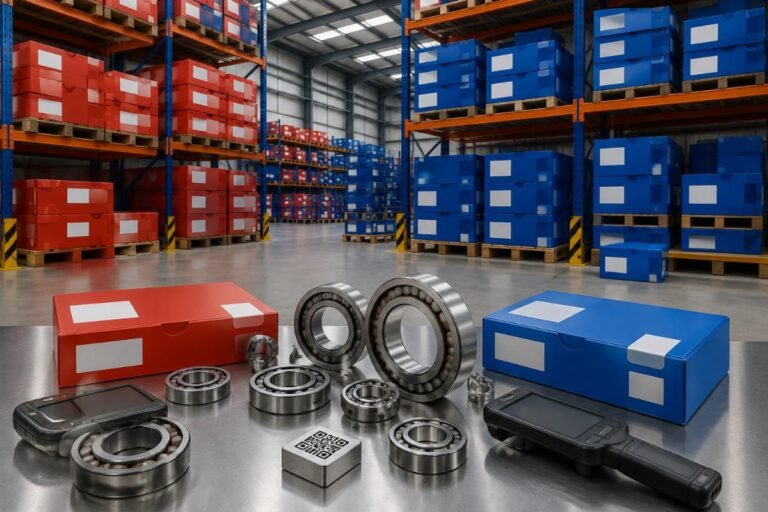
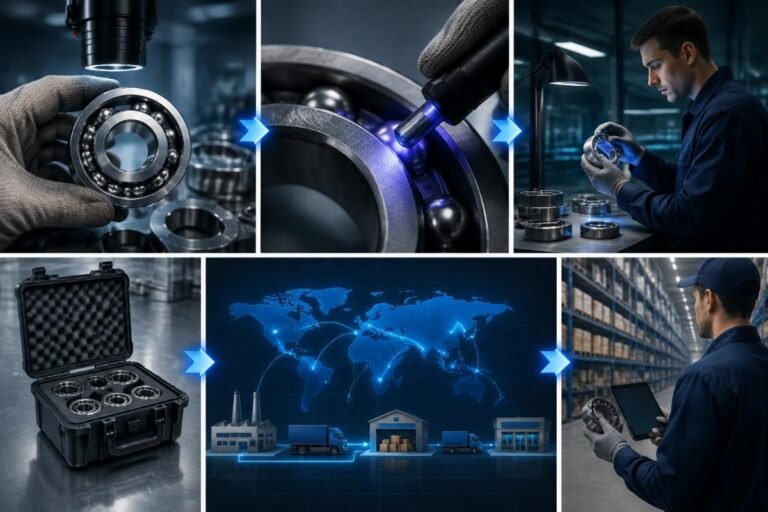
Managing spare parts for multiple processing sites is a logistical challenge. Inconsistent bearing brands and specifications lead to confusion, increased inventory costs, and delayed repairs. A distributor working with a regional food manufacturing group implemented a standardization program for their angular contact ball bearings. By selecting a single, high-quality supplier capable of providing genuine products with full traceability, they streamlined their procurement process.
Previously, each site purchased bearings from local vendors, resulting in a mix of brands and quality levels. This variability made it difficult to predict performance and plan maintenance. The new standardized approach involved selecting an angular contact ball bearing with robust sealing and food-grade lubrication, suitable for all their wet processing lines. The supplier’s global inventory allowed for consistent stock availability across all sites, eliminating the risk of using unknown or counterfeit sources. [NEED_CITE: risks of counterfeit bearings in industrial supply chains]
The results were immediate. Maintenance teams reported fewer unexpected failures, and inventory levels were optimized because they no longer needed to stock multiple variations of similar bearings. The traceability documentation provided by the supplier also helped during audits, demonstrating compliance with food safety regulations. This case illustrates how strategic sourcing partnerships can drive operational efficiency beyond just component performance.
For multi-site operators, the ability to source genuine parts from a reliable global supplier is a key advantage. It ensures that every bearing installed meets the same high standards, regardless of location. This consistency is vital for maintaining brand reputation and operational reliability. [NEED_CITE: benefits of centralized procurement for multi-site manufacturing operations]
Building a resilient supply chain requires partnering with suppliers who understand the unique demands of the food industry.
Conclusion
Consistent performance in food processing relies on standardized, high-integrity bearing solutions.
Selecting the right angular contact ball bearing involves balancing load capacity with environmental resistance. Prioritizing seal integrity and food-grade lubrication over simple housing material leads to longer service life and reduced downtime. Standardizing these components across multi-site operations simplifies maintenance and enhances overall reliability. By focusing on these critical factors, manufacturers can build more resilient and efficient processing lines.