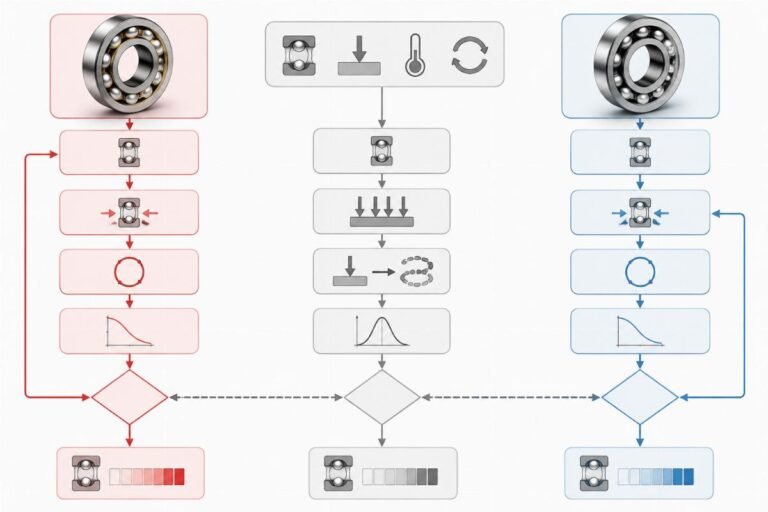
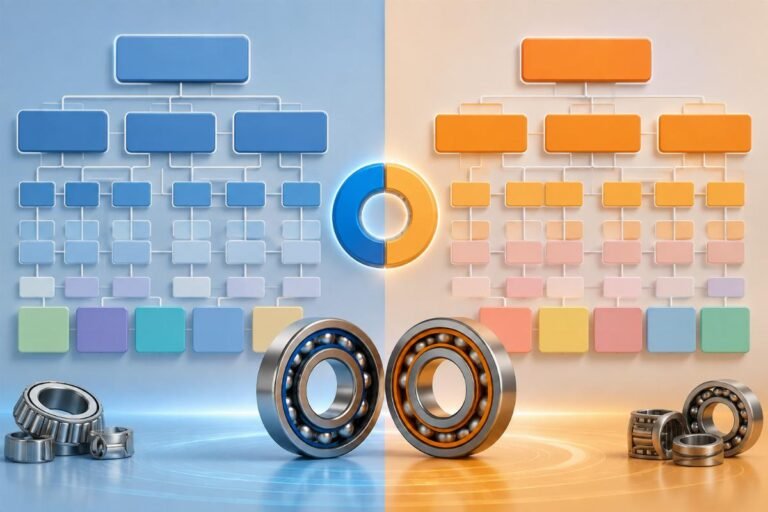
FAG vs SKF bearing cage material differences cause costly cross-brand substitution errors. Learn why default configurations diverge and how to decode suffix codes like J207, M, and TVP. Verify received goods with our four-step inspection guide to prevent premature field failures.
FAG vs SKF bearing radial clearance standards reveal that identical C3 codes do not guarantee matching tolerance ranges across brands. Cross-brand substitution requires comparing actual micrometer limits for specific bore sizes to prevent thermal seizure from fit and temperature effects. Verify measured clearance data before procurement to avoid costly field failures in motors and gearboxes.
When cross-referencing FAG vs SKF bearing precision class standards, identical P-class labels can hide critical tolerance differences. Discover how brand-specific centerline offsets affect fit and learn the five-step verification process using batch inspection reports to prevent premature failure.
FAG vs SKF bearing load rating per DIN ISO 281 often differ for identical model numbers due to brand-specific geometry coefficients. Direct catalog comparison leads to wrong selection in heavy-load applications. Learn the correct recalculation method and clearance verification steps to ensure reliable cross-brand substitution.
Stop risking costly returns by assuming basic number matches guarantee interchangeability in the FAG vs SKF bearing designation systems. Suffix codes for clearance, cages, and seals differ significantly between brands, making direct swaps dangerous. Learn our structured four-step verification workflow to ensure accurate cross-references and prevent field failures before shipping.
ISO 9001 certification for angular contact ball bearings ensures process traceability, not just product quality. Verify supplier claims to prevent counterfeit risks and ensure smooth GCC customs clearance. Learn how documented handling procedures protect precision components from storage damage and costly shipment delays.
Master the withdrawal sleeve technical specification by prioritizing thread pitch and taper ratio over simple bore size. Avoid catastrophic installation failures and costly returns through precise cross-brand compatibility checks for H-series equivalents. Secure wholesale credibility with verified material certificates and dimensional inspection reports.
Ensure SONCAP compliance for ceramic bearings by aligning HS codes and product descriptions to avoid costly customs detention at Lagos ports. Precise data matching between certificates and physical goods prevents rejection caused by minor model number typos or vague classifications.
Stop confusing legal protection with engineering specs when evaluating pillow block bearing duty cycle vs warranty. Standard units fail under continuous heavy loads regardless of brand prestige. Learn to match load ratings and seals to harsh environments, preventing costly downtime in mining and agricultural operations.
Avoid catastrophic downtime by mastering thrust ball bearing components like shaft washers, cages, and seat geometries. Learn to distinguish flat versus spherical seats and select the right cage material for heavy-duty axial loads. Prevent common assembly errors with this technical guide for industrial procurement.