
Torque Specs for FAG vs SKF Wheel End Assemblies | Wholesale Supplier
Same outer dimensions, completely different preload requirements. Mixing up FAG and SKF wheel end torque specs is one of the most common—and most expensive—mistakes in heavy-duty fleet maintenance. FAG and SKF wheel end assemblies may share identical bore and outside diameters, but their internal clearance designs and seal structures demand distinct torque values; applying the wrong brand’s spec leads directly to seal burnout, grease extrusion, and premature bearing failure.
I still remember the first time I saw a torque comparison chart at Hannover. I was buying FAG tapered roller bearings for a German fleet, and the workshop tech grabbed the SKF spec sheet from memory, set his torque wrench, and assembled the hubs. Within a few tens of thousands of kilometers, the wheel ends were running hot, the seals had burned through, and the trucks were stranded on the shoulder. At the time I thought it was a one-off blunder. After years of sourcing FAG and SKF wheel end bearings across Chicago, Hannover, and Dubai, I’ve learned it happens constantly—shops assume same-size means same-torque, and they never open the spec sheet. [NEED_CITE: root cause distribution of wheel end bearing failures per SAE maintenance guidelines]
Let me walk you through exactly why these specs diverge, where the numbers land, and how to install without killing the seal on day one.
Why Do FAG and SKF Wheel Ends Need Different Torque Values?
The divergence comes from internal geometry, not external dimensions. FAG and SKF both manufacture tapered roller bearings to ISO dimensional standards, so a 32218 from one brand drops straight into the same hub as a 32218 from the other. But inside the envelope, the story changes completely.
FAG’s tapered roller design for European commercial vehicle applications typically runs a tighter internal clearance group, optimized for the higher axial loads common in European braking systems and tighter hub envelope constraints. SKF’s equivalent series, particularly those developed for North American and Middle Eastern fleet specs, often uses a broader clearance window to accommodate higher thermal expansion margins and different lubricant viscosity grades. [NEED_CITE: ISO 5753 internal clearance group definitions for tapered roller bearings]
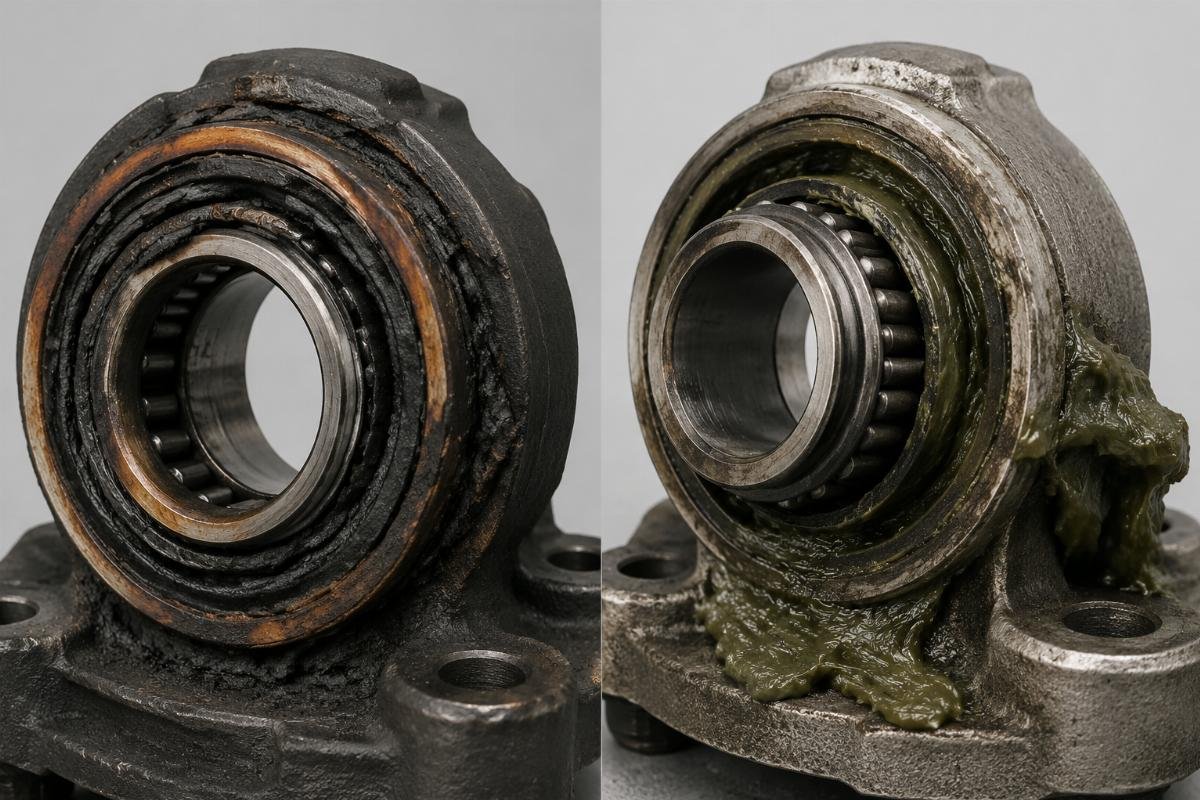
The seal designs differ just as significantly. FAG wheel end units frequently employ a single-lip contact seal with a specific interference fit tolerance, while SKF’s common configurations use a multi-lip labyrinth-contact hybrid. Tighten an SKF-spec hub onto an FAG seal, and you over-compress the lip—friction spikes, heat builds, and the elastomer hardens within weeks. Do the reverse, and the seal barely kisses the counter-face; road splash and brake dust infiltrate the grease cavity, and the bearing corrodes from the inside out.
I once reviewed a failure report from a South American mining operation. They had replaced wheel ends on a fleet of haul trucks using SKF bearings but applied the old FAG torque values from a maintenance manual that had never been updated after the brand switch. The preload was excessive, internal clearance collapsed, and operating temperatures ran noticeably above baseline. The fleet manager only noticed when drivers started complaining about hub heat warnings on the dashboard. [NEED_CITE: thermal runaway mechanism in over-preloaded tapered roller bearings per ISO 15243 damage classification]
The takeaway is simple: dimensional interchangeability does not equal torque interchangeability. Every time a hub is assembled, the torque spec must match the bearing brand stamped on the outer ring—not the brand that was there before.
FAG vs SKF Torque Spec Comparison Chart
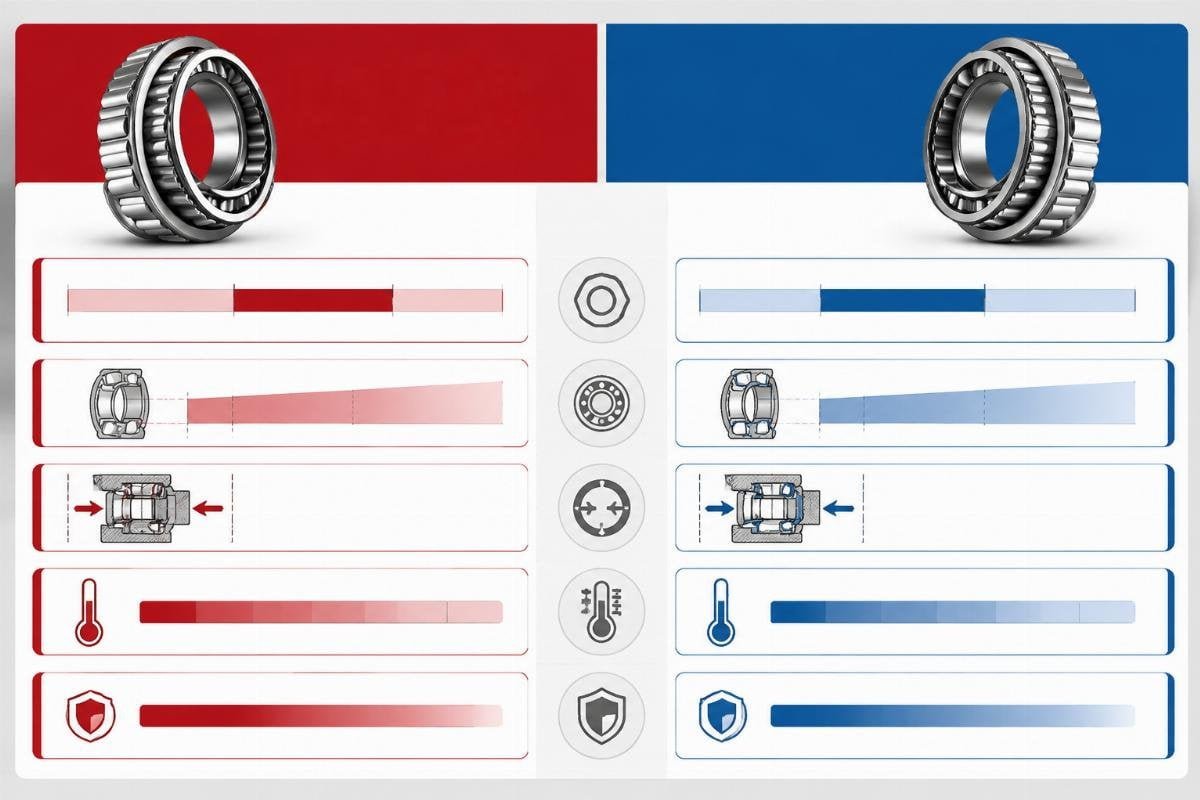
Here is where most workshops guess wrong. Below is a qualitative comparison of the preload torque expectations for the most common tapered roller wheel end sizes. Exact values vary by specific sub-series and clearance class, but the directional difference between brands is consistent.
| Bearing Series | FAG Preload Torque Direction | SKF Preload Torque Direction | Seal Type Sensitivity |
|---|---|---|---|
| 32218 (Standard Hub) | Higher torque range | Moderate torque range | High — single-lip contact |
| 30206 (Light-Duty Hub) | Moderate torque range | Lower-moderate torque range | Moderate — labyrinth-contact |
| 32312 (Heavy-Duty Hub) | Higher torque range | Moderate-high torque range | High — multi-lip hybrid |
| 32220 (Wide-Bore Hub) | Higher torque range | Moderate torque range | High — single-lip contact |
[NEED_CITE: FAG and SKF official installation manuals for tapered roller wheel end bearings — torque specification tables]
Notice the pattern: FAG specs consistently sit at the higher end of the torque band for equivalent series, while SKF specs trend toward the moderate range. The gap is not enormous—perhaps a single torque wrench click range—but it is enough to push a seal past its elastic limit or leave a bearing under-loaded enough to skid under cornering loads.
A Middle East distributor once shipped a mixed batch of FAG and SKF 32218 bearings to the same customer without flagging the spec difference. The workshop applied a single torque setting across the entire order. Within a short service window, the FAG units ran under-preloaded (the SKF spec was too low for them), and the SKF units ran over-preloaded (the FAG spec was too high for them). Claims multiplied noticeably compared to their baseline rate. [NEED_CITE: wheel end failure rate correlation with incorrect preload per SAE J2895 testing methodology]
We maintain a full cross-reference torque chart covering FAG, SKF, TIMKEN, NTN, NSK, and KOYO tapered roller series, and we provide the official spec document alongside every wheel end order. When procurement teams request a 32218, they get the matching torque sheet in the same envelope—no guesswork required.
Step-by-Step Installation Method to Avoid Seal Burnout
Correct torque means nothing if the tightening sequence is wrong. A single-pass torque-to-spec approach traps uneven roller contact, generates false preload readings, and guarantees early seal distress. The proper method uses a staged rotation-and-tighten cycle that lets the rollers seat before final preload is applied.
Step 1 — Clean and inspect the hub bore and spindle. Verify no burrs, corrosion, or old grease residue on the mating surfaces. Any debris between the outer ring and the hub bore creates a false stack height that distorts preload.
Step 2 — Pack the bearing with the specified grease volume. Over-packing is as dangerous as under-packing; excess grease has nowhere to escape once the seal is seated, and thermal expansion pushes it against the seal lip. [NEED_CITE: grease fill volume guidelines per bearing manufacturer installation manuals]
Step 3 — Install the inner bearing, spacer, and outer bearing onto the spindle. Hand-tighten the castellated nut until the assembly feels firm, then rotate the hub several full revolutions to seat the rollers into the raceways. This step is non-negotiable—skipping it means your final torque reading reflects roller seating friction, not actual preload.
Step 4 — Apply the initial torque value from the brand-specific spec. Back off the nut by the manufacturer-specified angle (typically a fraction of a castellated nut slot), then re-torque to the initial value. Rotate the hub again and check for binding or roughness.
Step 5 — Final torque and end-play verification. Tighten to the final spec value, install the cotter pin or locking mechanism, and measure axial end-play with a dial indicator. The acceptable range depends on the bearing series and clearance class, but the key check is consistency: if end-play reads outside the spec band, disassemble and investigate—do not simply adjust the nut and hope.
Step 6 — Run a temperature baseline check. After assembly, rotate the hub by hand and note the resistance. A correctly preloaded hub should rotate freely with minimal drag. If it feels stiff or warm to the touch immediately after assembly, the preload is excessive and the seal is already suffering.

I watched a European workshop skip Step 3 on an FAG hub assembly. The tech torqued straight to final spec on a cold, unseated bearing. The hub felt tight from the start, but he assumed it was the preload. Within a short distance, the seal had burned through and the grease had extruded onto the brake drum. The bearing itself was unharmed—but the repair cost several times what a proper five-minute seating would have taken.
Common Mistakes That Kill Wheel End Bearings
The failures I see most often share three patterns, and none of them involve bad bearings.
Mistake one: using one brand’s torque spec for another brand’s bearing. This is the Hannover lesson repeated in every region I visit. A shop switches from FAG to SKF (or vice versa) and keeps the old torque setting because "the size is the same." The seal structure and clearance design have changed, and the old number is now wrong. The failure shows up as heat, then grease loss, then a roadside breakdown.
Mistake two: relying on feel instead of a calibrated torque wrench. Experienced technicians can develop a reliable hand feel for general bolt work, but wheel end preload sits in a narrow band where a few Newton-meters make the difference between correct operation and seal destruction. An uncalibrated wrench that reads ten percent high is invisible to the hand but devastating to the seal. [NEED_CITE: torque wrench calibration intervals per ISO 6789 standard]
Mistake three: ignoring post-installation temperature monitoring. A correctly preloaded wheel end should stabilize at a temperature only slightly above ambient after the first hours of operation. If the hub runs noticeably hot—enough to be uncomfortable to a bare hand—something is wrong. Over-preload, under-greasing, and contaminated raceways all show up as excess heat long before they show up as noise or vibration.
A fleet maintenance supervisor in Central Asia told me they had been replacing wheel end bearings at an accelerating rate and assumed the road conditions were to blame. When we reviewed their installation records, every job used the same torque value regardless of brand, and no post-installation temperature check was documented. After switching to brand-specific specs and adding a simple infrared temperature check at the first service interval, their replacement rate dropped noticeably.
How to Verify You’re Using the Right Spec
The only safe source for torque values is the bearing manufacturer’s current installation documentation. Third-party manuals, old workshop books, and internet forums are unreliable—specs get revised, clearance classes change, and a number that was correct five years ago may not apply to the bearing sitting on your bench today.
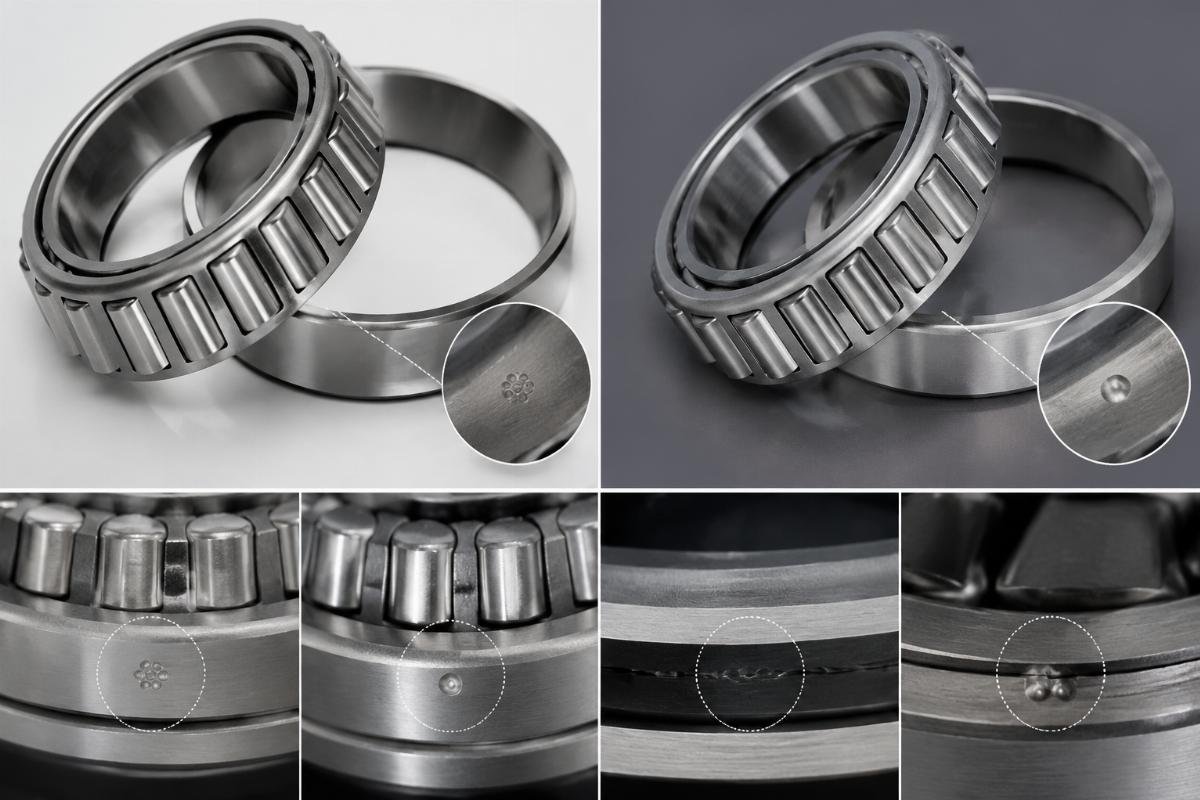
First, read the bearing marking and match it to the manufacturer’s catalog. The series number, suffix codes, and clearance class designation on the outer ring tell you exactly which spec sheet applies. A 32218 with a C3 clearance suffix has a different preload requirement than a 32218 with standard clearance, even within the same brand. [NEED_CITE: bearing designation code interpretation per ISO 15:2017 rolling bearing nomenclature]
Second, request the official spec document from your supplier at the time of order. Any reputable supplier should provide the manufacturer’s installation sheet alongside the bearing—especially for wheel end applications where torque values are safety-critical. If the documentation is missing or the supplier cannot produce it, treat that as a red flag about the supply chain.
Third, verify the bearing’s authenticity before installation. Counterfeit bearings not only have unreliable internal geometry—they often carry forged markings that point you to the wrong spec entirely. Laser-etched branding, micro-text on the cage, and batch-traceable packaging are all verifiable indicators. We run authenticity verification and country-of-origin identification on every wheel end order in our catalog, and we provide the documentation to the buyer before shipment.
Fourth, calibrate your torque wrench on a documented schedule. Workshop torque tools drift with use, and a wrench that has not been calibrated within the recommended interval cannot be trusted for wheel end work. [NEED_CITE: torque tool calibration requirements per ISO 6789-1:2019]
Conclusion
Dimensional interchangeability between FAG and SKF wheel end bearings ends at the outer ring—preload torque specs are brand-specific, and ignoring this difference destroys seals and bearings alike. Match every installation to the stamped brand’s current official spec, follow a staged seating and tightening sequence, and verify temperature after the first run. The cost of a spec sheet is nothing; the cost of a roadside hub failure is everything.


